
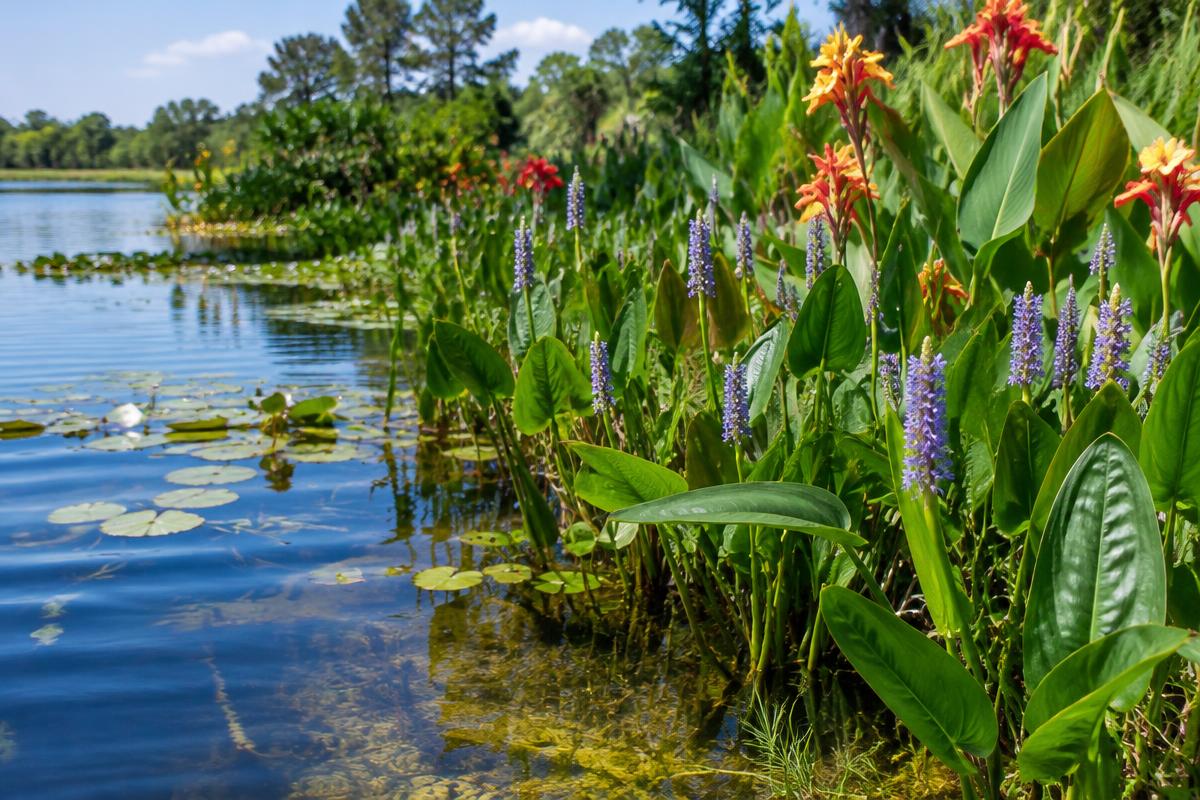
As part of its proactive approach, Palm Beach Aquatic takes every opportunity to install aquatic plants within its lakes and waterways to improve aesthetic appeal (aquascaping) and in order to utilize the biological processes of the plants to help improve and regulate waterways. The process of using plants to remediate environmental substrates is called phytoremediation.
The word comes from the Greek « phyto » = plant, and Latin « remedium » = restoring balance, or remediating. Phytoremediation is the de-pollution of contaminated soils, water or air with plants able to contain, degrade or eliminate metals, pesticides, solvents, explosives, crude oil and its derivatives, and various other contaminants, from the mediums that contain them. It is clean, efficient, inexpensive and non-environmentally disruptive, as opposed to processes that require excavation of soil.
A range of processes mediated by plants are useful in treating environmental problems:
Phytoextraction - uptake and concentration of substances from the environment into the plant biomass.
Phytostabilization - reducing the mobility of substances in the environment, for example by limiting the leaching of substances from the soil.
Phytotransformation - chemical modification of environmental substances as a direct result of plant metabolism, often resulting in their inactivation, degradation (phytodegradation) or immobilization (phytostabilization).
Phytostimulation - enhancement of soil microbial activity for the degradation of contaminants, typically by organisms that associate with roots. This process is also known as rhizosphere degradation.
Phytovolatilization - removal of substances from soil or water with release into the air, sometimes as a result of phytotransformation to more volatile and / or less polluting substances.
Rhizofiltration - filtering water through a mass of roots to remove toxic substances or excess nutrients. The pollutants remain absorbed in or adsorbed by the roots.
Advantages of Phytoremediation:
The cost of phytoremediation is generally lower in the long run than traditional processes.
The plants provide animal habitat.
The plants beautify the waterway.
The plants increase gas exchange between the waterway and atmosphere and subsequently increase dissolved oxygen levels.
The plants can be easily monitored and maintained.
The plants may help reduce the amount of chemicals necessary to keep waterways beautiful.